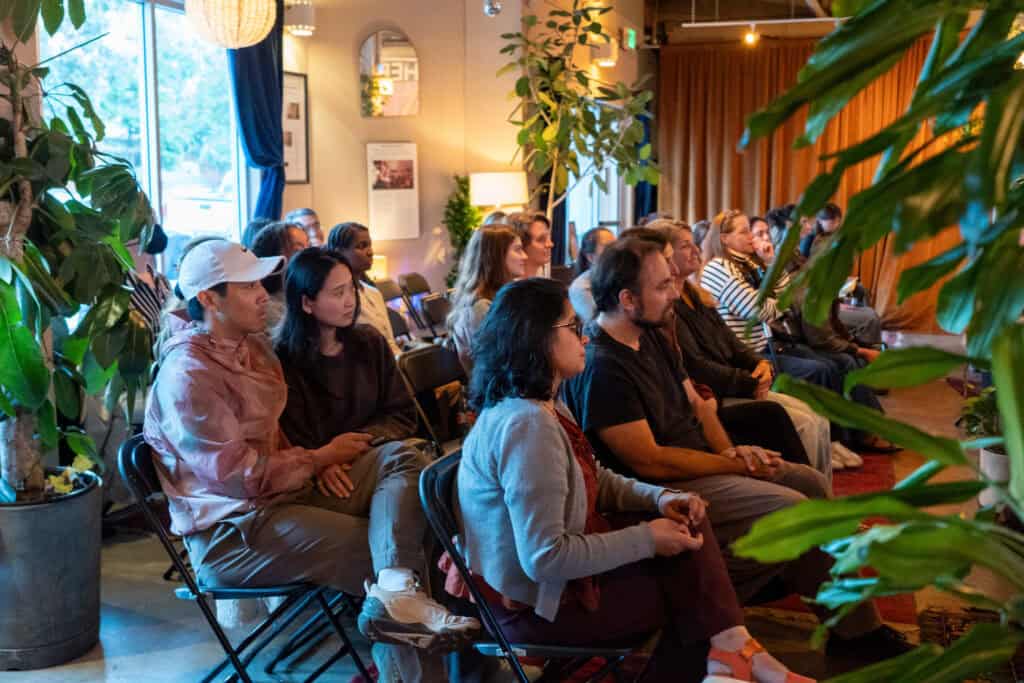
On April 24th, Save The Bay returned to Manny’s for Climate Conversations: Bay Area Strategies for Sea Level Rise, as part of SF Climate Week. This year’s program focused on how local and regional governments around the Bay Area are collaborating to design shoreline adaptation plans to protect our communities from sea level rise and flooding.

With the passage of SB 272 (2023), California is now requiring local governments to create shoreline resilience plans. Our conversation focused on what those plans should include, and what challenges cities face in turning them into reality. Dana Brechwald from the Bay Conservation and Development Commission (BCDC) talked about how they are working regionally to support cities in balancing the different elements that plans need to address. Danielle Mieler from the City of Alameda talked about the projects that they are developing to address what they consider an “existential crisis”. Summer Bundy from OneShoreline in San Mateo County talked about they are working to meet current flood protection needs while designing for the future.

We also introduced Save The Bay’s resilience snapshots. Save The Bay developed these as a way of understanding where each city is in its resilience journey. The snapshots highlight opportunities to improve flood protection and focus specifically on where cities can use nature-based solutions. Check out your city’s snapshot and learn about where you can help promote nature-based shoreline resilience in your community.
Nature-based flood protection includes tidal marsh restoration to act as a buffer between a city and the Bay. But it can also describe approaches that combine traditional engineered protections with nature. Horizontal levees are a great example where a levee is designed with a broad slope populated with native plants and soil. This design provides complete flood protection and uses dirt and plants to improve habitat, water quality, and recreation.
As sea levels rise and flooding becomes a more common occurrence, the Bay Area needs to be ready by taking steps now to meet this challenge. We’re grateful to our speakers for sharing their expertise, and for working hard to ensure that we’re laying the foundation for a safe, flood-resilient future.
Thank You to Our Sponsors
None of this would be possible without the generous support of our sponsors. Their commitment to climate resilience in the Bay Area makes evenings like this one, and the work that follows, possible.