
What’s scarier than a masked villain creeping up behind you? For our restoration team, it might be a tumbleweed!
Pulling invasive plants is one of the most important jobs our staff, volunteers, and students do at our restoration sites. It makes room for native habitat to thrive along the shoreline, but it can also be challenging, prickly work. Some of these plants are tough to pull and even tougher to keep away.
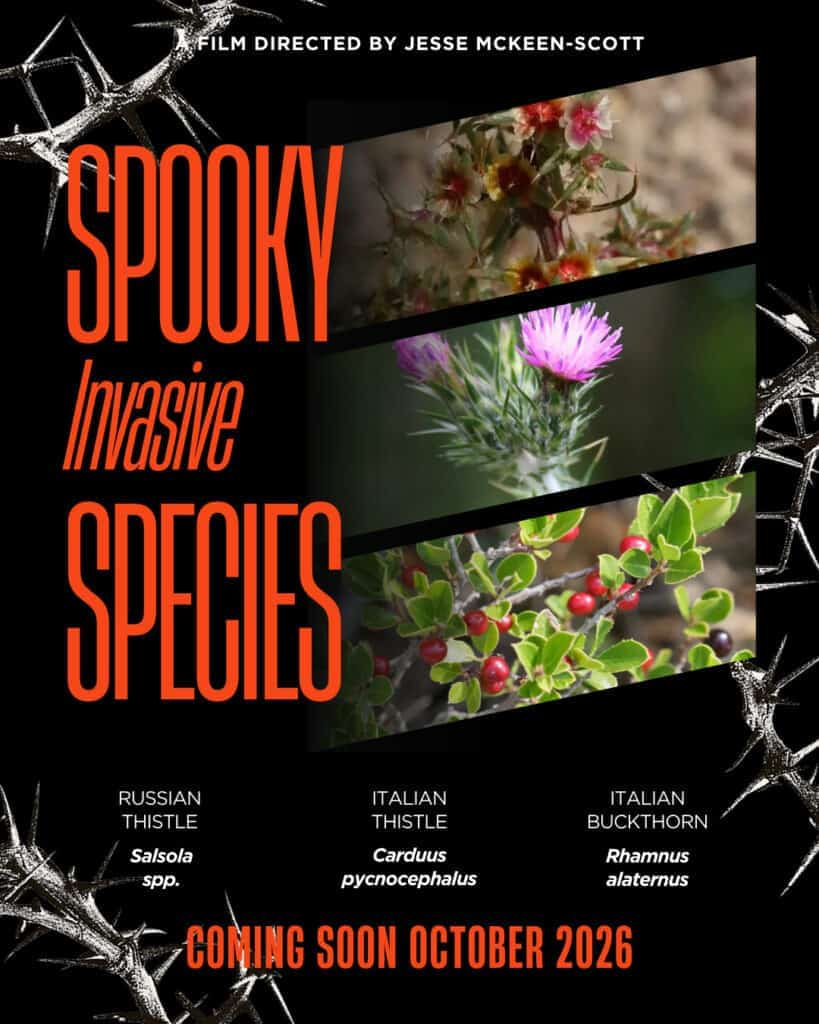
This Halloween, we paired three of the scariest plants with horror films, new and old. One of these plants can grow as big as a car. Another fights back with sharp spines. And one keeps rising from its stump long after we cut it down.
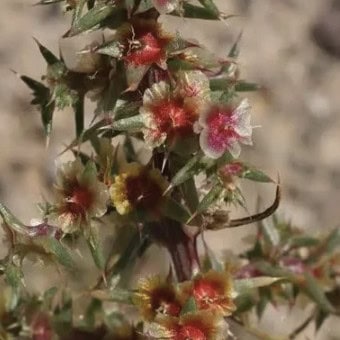
Russian thistle
Salsola spp.
Spooky Movie: Halloween
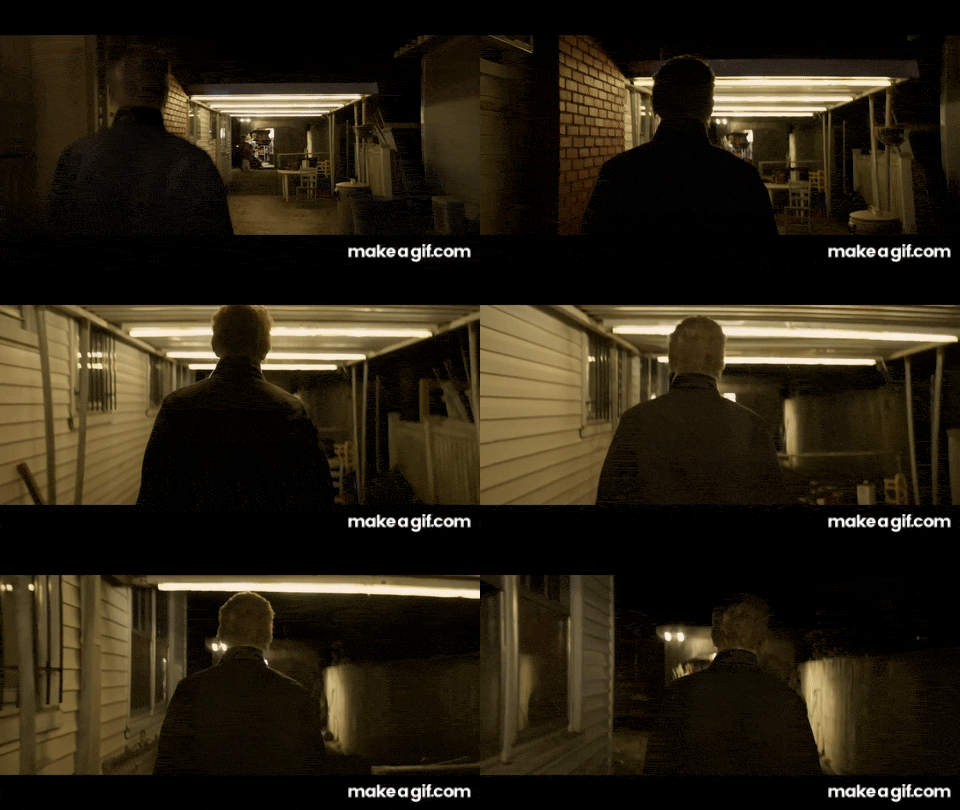
Michael Myers is known to slow-walk behind his victims until he somehow overtakes them. We think Russian thistle (also known as tumbleweed) took a page from his book. It seems harmless as it tumbles slowly across the landscape. But it’s quietly dropping thousands of seeds, and by next season, they’re everywhere. Sometimes these tumbleweeds even overtake cars on the freeway.
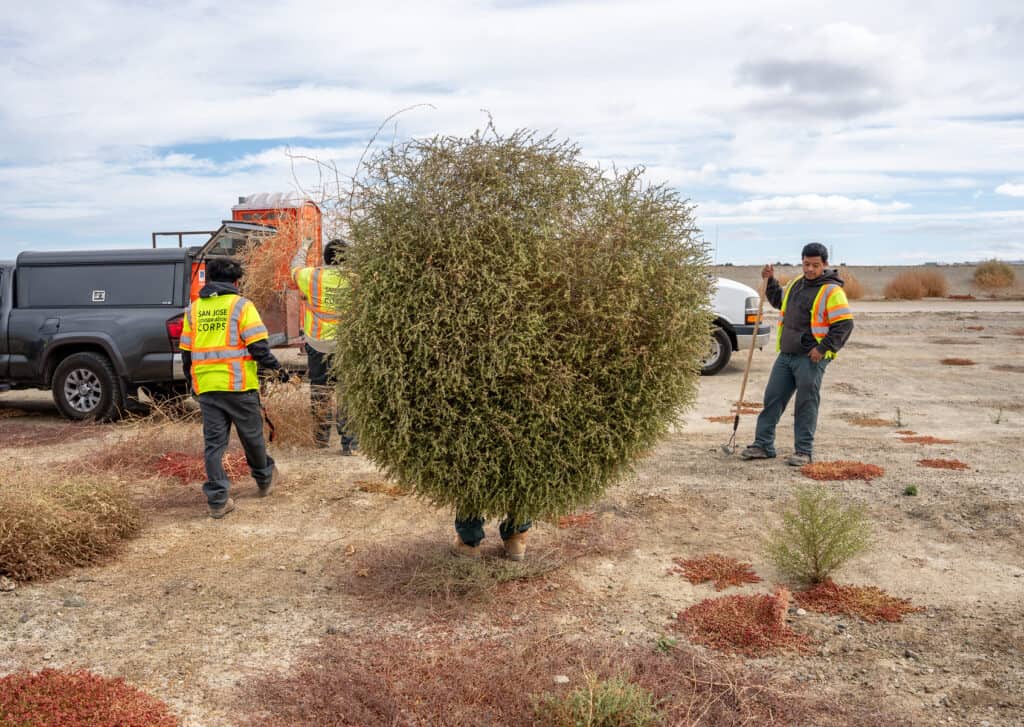
Our Habitat Restoration Team and the San Jose Conservation Corps spent the fall of 2022 clearing almost four tons of Russian thistle from the All American Canal habitat transition zone to get it ready for planting. Some of these plants were truly as big as cars.
We’re feeling lucky that our newest restoration site in Mountain View has far less Russian thistle to contend with.
Scariest traits:
- Will drop thousands of seeds as the wind tumbles it across the landscape
- Mature Russian thistle has spiny leaves that make it uncomfortable to handle
- It can grow to the size of a car
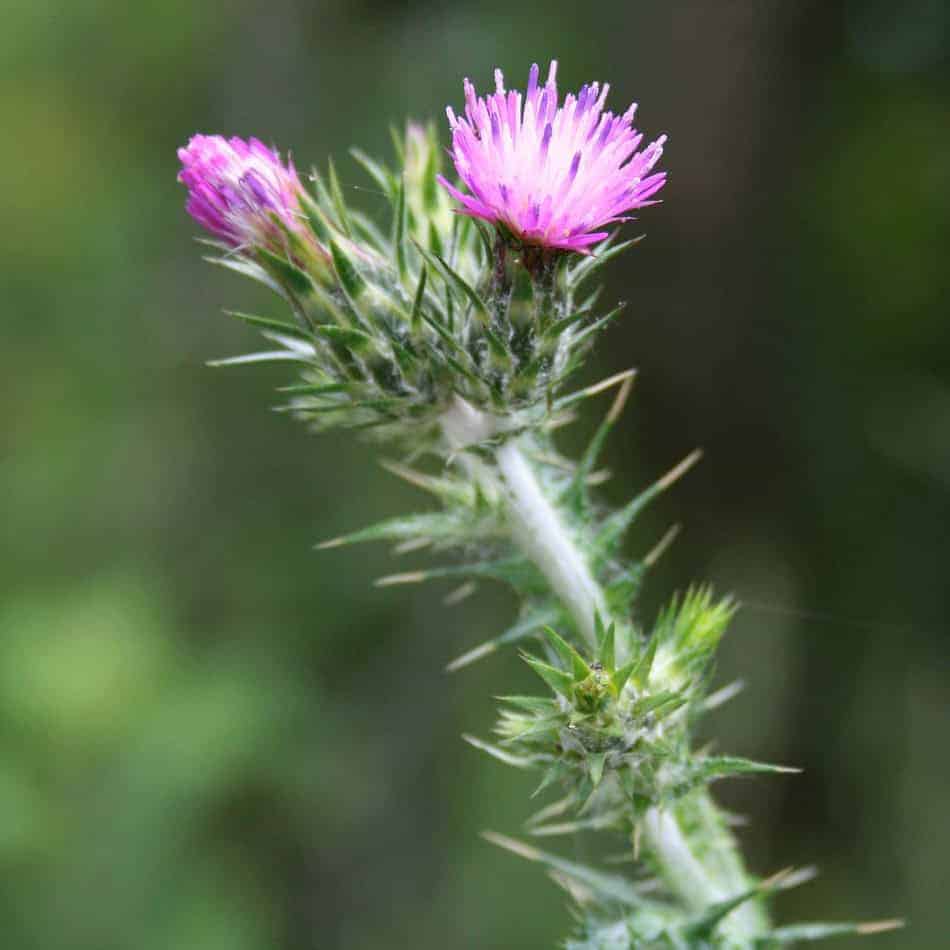
Italian thistle
Carduus pycnocephalus
Spooky Movie: Psycho
Psycho‘s shower scene has nothing on the stabbing effect of Italian thistle. This invasive species has sharp spines all over its stems and leaves. Reach for a handful of soft invasives like mustard, only to grab the hidden stem of an Italian thistle? You’ll be screaming just like Marion Crane!
Italian thistle is a wind-dispersed annual. Its seeds can drift far, so we find it at most of our restoration sites. Like many invasives, it spreads fast and takes over, especially in disturbed areas. That reduces biodiversity and can create a monoculture instead of healthy shoreline habitat.
Not everyone is daunted by a plant that can fight back. Many of our middle school students LOVE the challenge of avoiding its attacks while they help pull out this invasive species (although we always offer them an alternative task).
Scariest traits:
- Sharp spines on stems and leaves
- Wind-dispersed seeds help it spread far and wide
- Reduces biodiversity
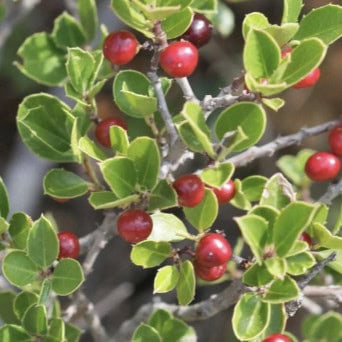
Italian buckthorn
Rhamnus alaternus
Spooky Movie: Sinners
Is this woody green plant the original vampire from Sinners? This invasive seems practically impossible to kill! It spreads its seeds through berries that birds eat, and it resprouts vigorously from its stumps when damaged. The biggest difference between buckthorn and a vampire is that buckthorn can be killed by several years in the dark, while vampires are killed by the sun.
Italian buckthorn is most prevalent at our restoration sites in Palo Alto. There, we have experimented with several non-chemical removal methods, including years of cutting back regrowth and using Buckthorn Baggies. The most effective technique for us so far is using a weed wrench to pull these plants out by their roots, but this only works when they are small.
Why is it so important to remove this invasive plant? Its abundant reproduction and ability to crowd out natives make it a high priority. We will continue to target Italian buckthorn for the foreseeable future to keep it out of our restoration sites.

Scariest traits:
- Vigorous regrowth after cutting
- Abundant seed spread
- Sap can cause skin irritation for some people
- Crowds out natives