
Not every environmental champion works on the shoreline, some fight for it in council chambers and city halls. As part of our Nature-Based Champions series, we’re spotlighting local leaders working to protect the Bay and the communities around it. This month, meet Pat Showalter, Councilmember in the City of Mountain View and a long-time champion for the South Bay Salt Pond Restoration Project, the largest tidal marsh restoration effort on the West Coast.
Q: Elected officials have a lot of priorities. What makes you care about sea level rise planning specifically?
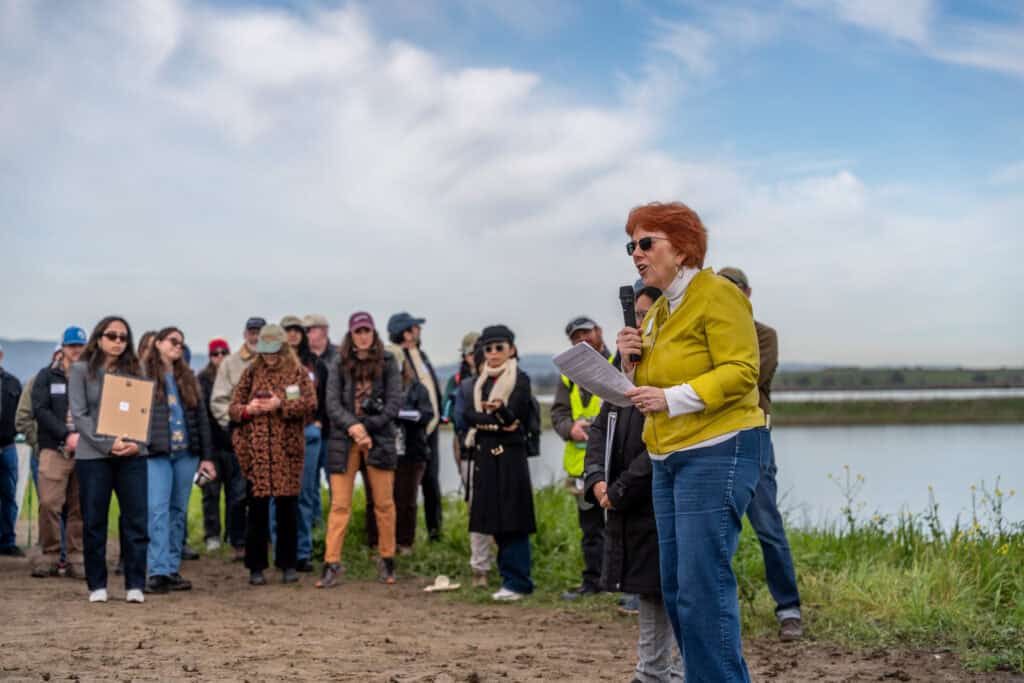
I’m an environmental engineer! I’ve worked in water resources management for my entire career and for the last 20 years or so I’ve worked on restoring San Francisco Bay; including work to protect communities from flooding. I wanted to get involved in city council to be one of those decisionmakers who has a good environmental background and can always bring that experience into deliberations.
Q: How do you build community support for a coastal resilience project?
Well, the messaging for these projects has changed over time frankly. People used to care a lot about habitat. They still care a tremendous amount, but over the decades, people have come to believe in and want to do something about sea level rise too. There has also been a shift in the way we talk about a project’s value.
Years ago we did polling for a tax measure about flood control in Mountain View and initially we were quite surprised to find out that trails were on the top of the priority list for voters. In other words; if you were going to do a flood protection project people were much more interested in helping pay for it if involved trails.
I’ve observed again and again that people in our area still want that access to open space. They want trails and parks and a clean environment. I like to see those things legitimately tied into projects that are focused on civil engineering issues like flood protection – which really matter but aren’t always so sexy.
When you first get out of engineering school, you have all this jargon and you want to sound impressive to your peers, because you have to establish your credibility. But I think as I’ve gotten older and I’ve needed to just talk to ordinary people more, I’ve developed little sound bites about how to explain things for clarity – or so that they don’t get completely bored before I’ve finished talking! I like to say that marshes are like “mother nature sponges,” for instance. Because they absorb lots of water and wave energy. That really is a very tight explanation of what they do as it relates to flood control.
Big projects of course, have multiple objectives and I don’t remember ever being involved in a project that was just done for one basic reason. The Venn Diagram of all the objectives that good coastal projects have hasn’t necessarily changed much over time, but the space where different priorities overlap and where we can get something done – that does shift.
Different voices are louder over time and different things get more coverage, but that whole idea of a ‘multi objective project’ never goes away.
Q: How does your background help you champion environmental work?
When you’re an elected official, you have to help make sure city priorities get done, because at the end of the day, what do cities do? We provide city services. We provide people with streets that are maintained and working water systems. We make the contracts with the trash hauler companies. We deal with the water that goes from your house to the sewage treatment plant. At the same time, we must make sure that all of these services are pursued in the most efficient and environmentally protective manner possible. I worked in government for most of my career and I think that professional experience can be really valuable on council because when I make a recommendation, I understand that there are a lot of important steps that need to happen to get anything done.
Q: The South Bay Salt Ponds Project is the largest marsh restoration project on the West Coast. What does it mean to you?
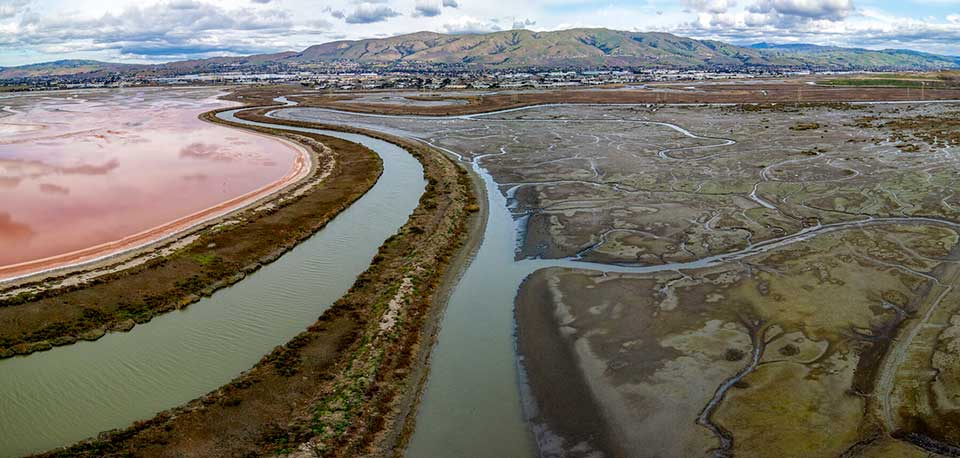
In my little part of the Bay (the South Bay), it’s very shallow, so the salt ponds offer a way for us to reclaim the natural habitat that was once there. That project has been about getting things back in balance from an ecological point of view; we’re essentially trying to get the system into an equilibrium where it can maintain itself in a healthy manner.
When I first moved here, the South Bay was basically the salt ponds – which was no man’s land. People didn’t have access and if they did it was to use the shoreline as a dump. The area was basically to be avoided. We’ve turned this place into something that is a magnificent preserve for fish, fowl, and all sorts of mammals; and of course it’s great habitat for people to venture into. What’s not to like? The transformation of this place is an environmental engineer’s dream come true.