Habitat Restoration at Eden Landing (Hayward)
Come join us at Eden Landing Ecological Reserve to help restore former industrial salt ponds into healthy salt marsh habitat! This vision includes turning vulnerable fields of invasive mustard and […]

Come join us at Eden Landing Ecological Reserve to help restore former industrial salt ponds into healthy salt marsh habitat! This vision includes turning vulnerable fields of invasive mustard and […]
Highway 37 will soon be underwater. The highway’s redesign, if done correctly, offers an opportunity to build climate-resilient infrastructure and restore 20,000 acres of wetlands.
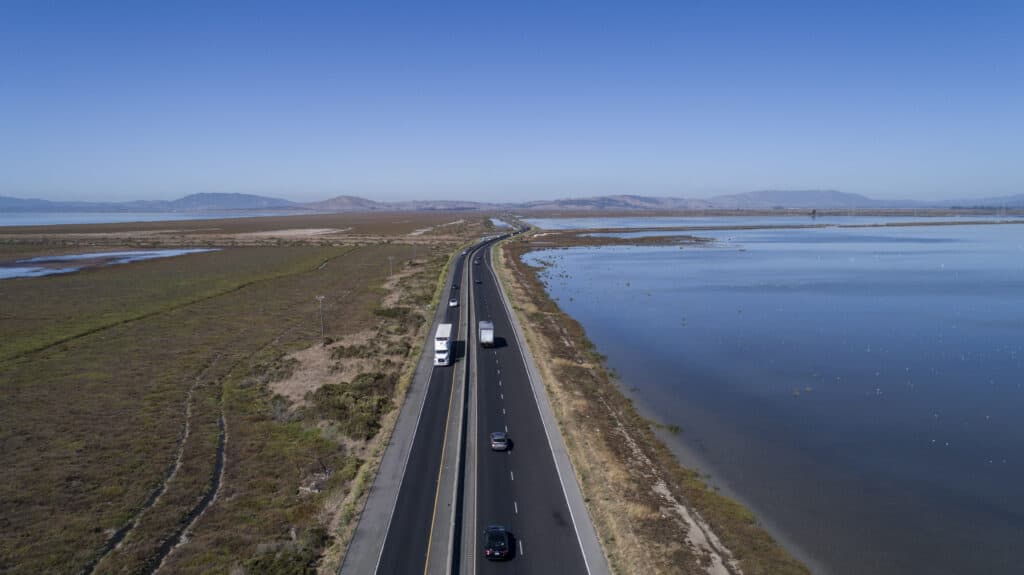
Highway 37 sits on a levee in San Pablo Bay in the north Bay Area. In 2017, the highway was shut down for a month due to flooding caused by a combination of King Tides and winter storms. During the atmospheric rivers in January 2023, the highway was again closed for a weekend when it flooded due to Novato Creek overflowing. These closures will likely happen again and again as sea levels rise if no action is taken. This would disrupt 40,000 daily car trips which people depend on to get them to jobs in Marin, Sonoma, Napa and Solano Counties. Additionally, the levee that the highway sits on currently blocks natural tide flow from San Pablo Bay to wetlands on the north side of the highway.
The redesign of Highway 37 is currently in the early planning stages. One of the proposed designs is to build the highway on an elevated causeway. This would put the highway above the reach of rising sea levels while also letting water ebb and flow with natural tidal action between San Pablo Bay and the wetlands beyond the highway. Once these 20,000 acres of wetlands are reconnected with the natural flow of tides, they can be restored to their full function, providing habitat, carbon sequestration, and flood resilience benefits.
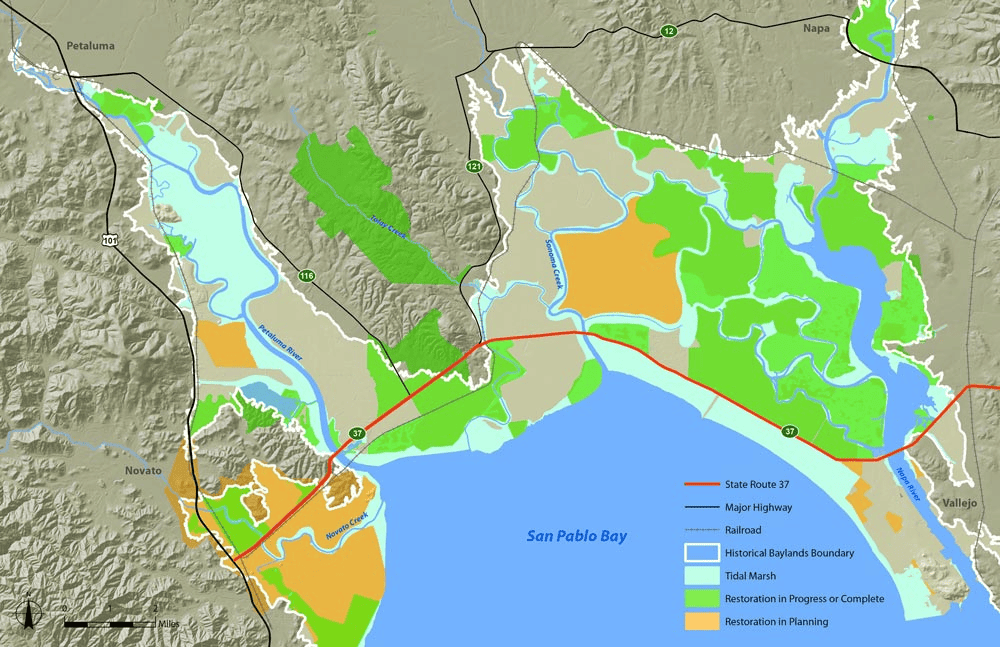
Photo: Sonoma Land Trust
SR 37 Baylands Group (Audubon California, California Department of Fish and Wildlife, Ducks Unlimited Inc., Marin Audubon, Marin Conservation League, Point Blue Conservation Science, San Francisco Bay Joint Venture, San Francisco Bay Regional Water Quality Control Board,. San Francisco Estuary Institute,. San Pablo Bay National Wildlife Refuge, U.S. Fish and Wildlife Service, Save The Bay, Sonoma Land Trust,. State Coastal Conservancy)
Groundwater and sea level rise threaten vulnerable communities by displacing toxic contamination.
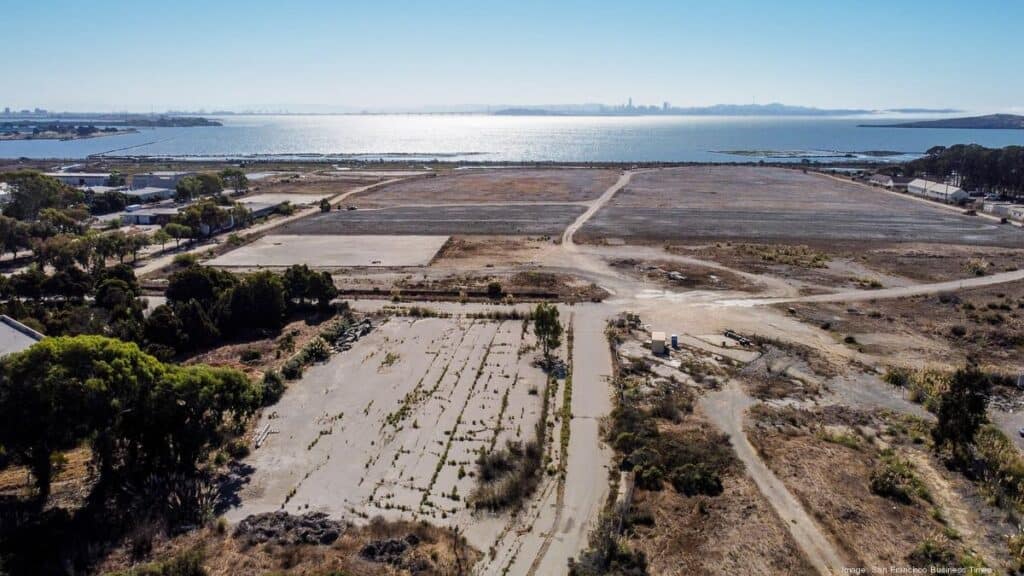
The AstraZeneca site on the Richmond shoreline was once the site of sulfuric acid, pesticide, and fertilizer manufacturing. Because of this industrial pollution, it is now contaminated with high levels of toxins such as benzene, lead, arsenic, uranium, and pesticides like DDT. So far, cleanup efforts have included leaving contaminated soil on site and “capping” it by placing concrete on top. The City of Richmond has plans to build up to 4,000 housing units on top of this contaminated land. However, as sea levels rise, groundwater will also be pushed up to the surface, potentially pushing the toxins into pipes and through cracked concrete, putting the health of residents and surrounding communities at risk.
For decades, frontline community members in Richmond have been raising awareness about the health and environmental threats posed by groundwater and sea level rise displacing toxic contaminants on industrial sites. Because of a long history of racist policies, the communities surrounding these sites are largely low-income communities of color. They are advocating for full cleanup of the AstraZeneca site before any housing is built on it, rather than simply capping contamination in place. This would involve removing all contamination from the site and taking it to a safer storage or treatment site. The Department of Toxic Substances Control (DTSC), which oversees cleanup of the site, should require AstraZeneca to conduct a full cleanup. Additionally, groundwater and sea level rise should be considered in all toxic site cleanup efforts.
Richmond Shoreline Alliance (Sunflower Alliance, Greenaction, Sierra Club, CESP, Point Molate Alliance, Richmond Progressive Alliance)
Of all the counties in California, San Mateo County is the most vulnerable to sea level rise.
Sea Level Rise
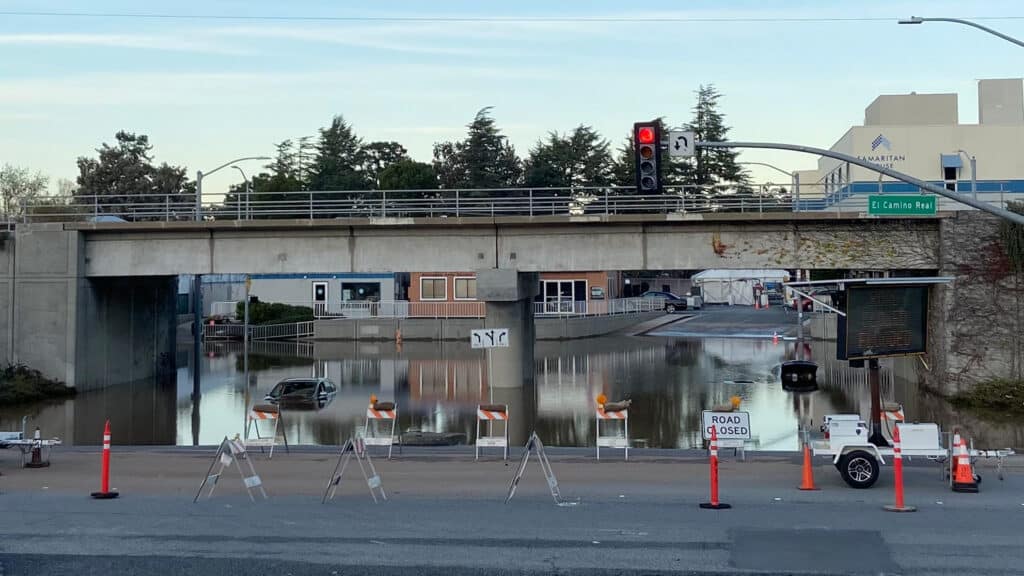
Sea levels could rise by up to 3.3 feet in San Mateo County by 2070 and 6 feet by 2100 according to the county’s Sea Level Rise Vulnerability Assessment. While the whole Bay Area will experience rising seas, San Mateo County is particularly vulnerable, with over 30,000 homes, dozens of schools and hospitals, and over 7,000 acres of wetlands at risk of flooding by 2070. Historically underinvested communities will be the most at risk when flooding occurs because historic inequities placed affordable housing in higher flood risk areas and because they are more vulnerable to economic damages incurred.
Inland Flooding
Not all flooding happens at the coast. As storms and groundwater rise become more extreme, Bay Area communities will continue to be impacted by flooded streets and homes due to outdated stormwater infrastructure. Additionally, urban areas are primarily covered in concrete, asphalt, and other surfaces that don’t allow water to seep through. This means that during storms, rainwater runs off these surfaces picking up pollutants (like motor oil, chemicals, and trash) on its way to creeks and the Bay.
Sea Level Rise
Preparing the county for sea level rise will require a coordinated effort among cities to plan and implement solutions such as wetland restoration, horizontal levees, and sea walls. San Mateo County has taken steps in this direction with the creation of OneShoreline, a government agency that works across jurisdictional boundaries to plan and implement sea level rise resilience measures in the county. The County also conducted a countywide Sea Level Rise Vulnerability Assessment to identify areas that will be impacted by flooding and erosion and provide solutions.
This coordinated effort should be replicated across the Bay Area. Cooperation between cities and counties throughout the Bay Area is necessary to ensure that shoreline protection in one area doesn’t result in greater flooding in others. This could happen, for example, when a sea wall in one city deflects storm surges towards an adjacent city without flood protections. There should also be coordination at the state and federal level to provide funding to low-income cities that may not otherwise have resources for sea level rise planning. The San Francisco Bay Conservation and Development Commission (BCDC) is currently creating guidelines to shape local sea level rise plans.
Inland Flooding
Cities must invest in updated stormwater infrastructure to reduce flooding and capture and clean stormwater before it reaches our waterways. In particular, green stormwater infrastructure (GSI) uses natural systems like vegetation, soil, and permeable surfaces to capture stormwater and filter out pollutants. Examples include rain gardens, bioswales, and tree wells. When cities upgrade streets, parks, and other infrastructure, they could be incorporating GSI at the same time, making these new investments more flood resilient. San Mateo County is supporting this kind of integrated planning with their Sustainable Streets Master Plan.
OneShoreline, County of San Mateo

Favorite native plant or animal: Burrowing Owl
Favorite thing to do in the Bay Area: Riding my bike, birding and taking photos
Superpower: Converting micro plastics into sustainable transportation
Steve is a Bay Area native whose love of hiking and cycling has deepened his appreciation for the region’s natural beauty.
As a Director of Engineering at Adobe, he focuses on building solutions that benefit everyone. He joined Save The Bay’s Board of Directors to combine his passion for the environment and the Bay Area with his technical expertise, to help preserve the beauty of the San Francisco Bay for all to enjoy.