
Restoration work is cyclical. What our Habitat Restoration Team does in the spring looks very different from what we do in the summer through fall. Our work is guided by the seasons, the rain, and plant growth stages. As transplanting season winds down, vegetation monitoring and seed collecting begin.
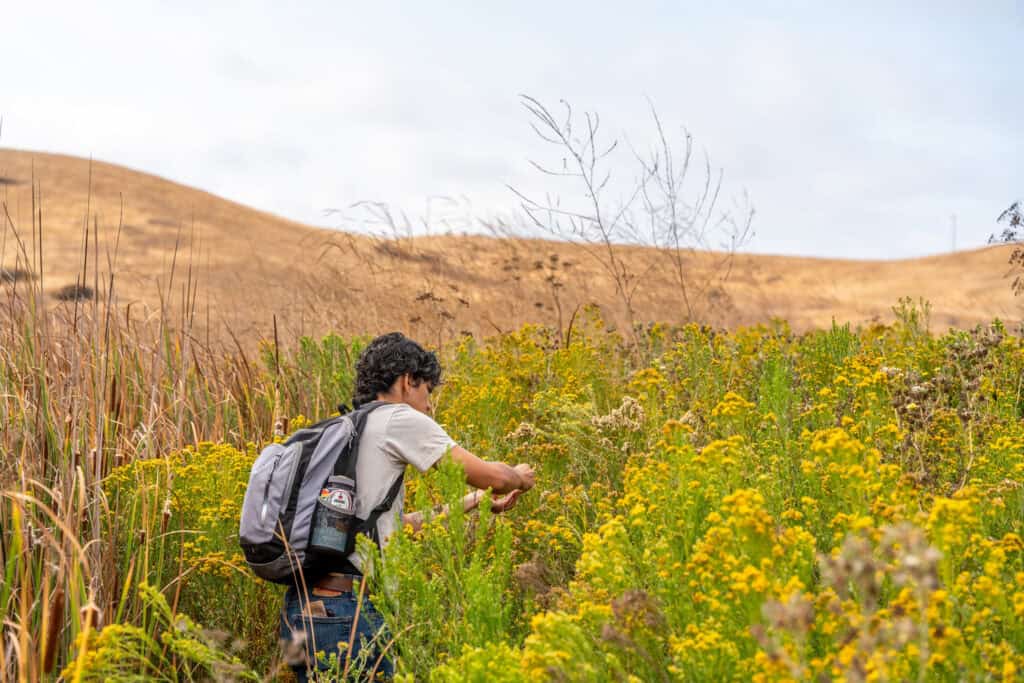
At this point in the cycle, our nursery team has begun to visit our collection sites to get a feel for where all the plants are in their fruiting stage – the stage at which they go to seed. Knowing when each species is ready to harvest is critical, since you may only get one or two chances in a year. With all the microclimates around the Bay, plant populations can vary greatly in the timing of their seed production. Factors like aspect (compass direction) of a slope, proximity/access to water, and sun exposure can drastically change the ripening of a seed pod.
This year, our targets include many species such as Stipa pulchra (purple needlegrass), Madia sativa (coast tarweed), Escholzia californica (California poppy), Achillea millefolia (yarrow), and Artemesia douglasiana (California mugwort.
As an organization that does restoration work, we have the privilege of being able to collect seeds from our partners’ land and supply these sites. This privilege includes permits to do said collections on natural reserves within East Bay Regional Parks District and the City of Palo Alto.
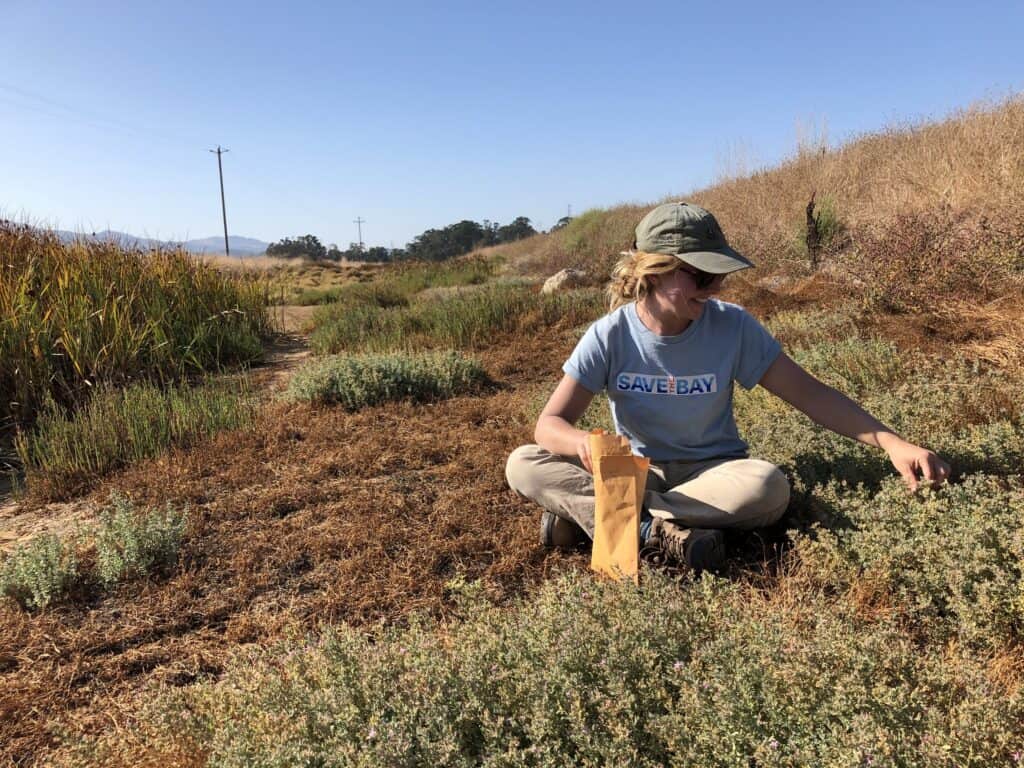
Growing plants from seed isn’t just fun and fulfilling, it’s critical to promoting genetic diversity and local adaptions within populations. This is important, particularly with the increasing effects of climate change, because we want to build local populations’ resistance and tolerance to increased seawater inundation and higher daily temperatures.
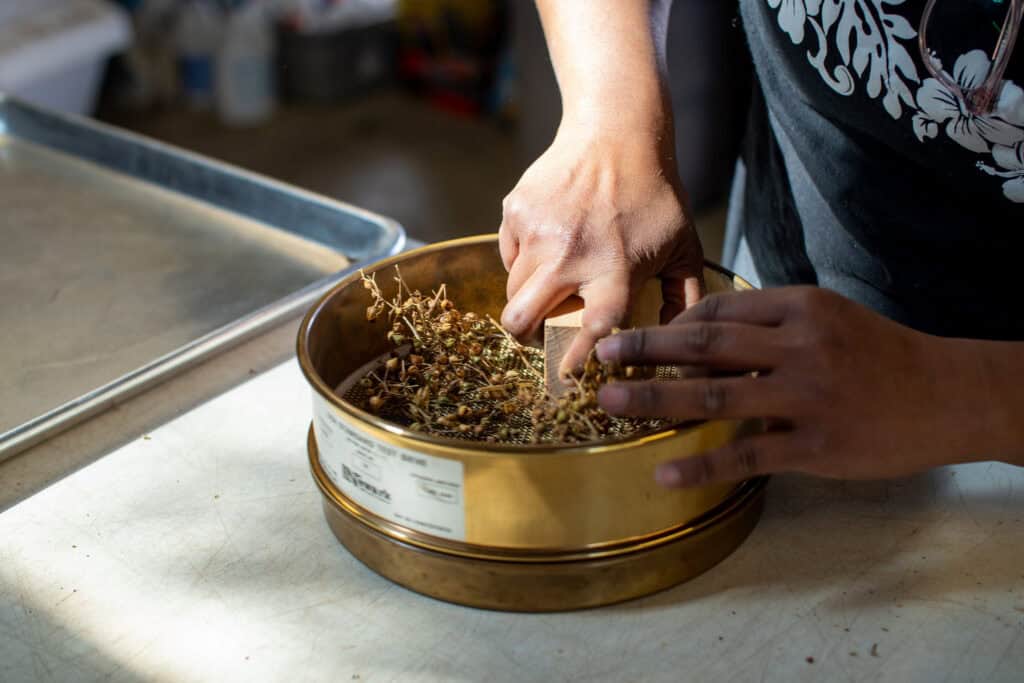
Once seed has been collected, we clean it. The degree to which it’s cleaned depends on how we plan to use it in the future. Seed that will be used to grow plants in the nursery for our restoration efforts will be cleaned thoroughly for higher germination rates. Seed that comes from annual native species is usually intended for scattering onsite and is left with a high percentage of chaff, the part of the seed pod, flower, or dispersal mechanism still attached to the seed after collecting. Many seeds here in the Bay use hooks, barbs, or hairlike filaments called pappus to disperse themselves and are usually cleaned off our seeds. Cleaned perennial seeds will yield higher germination rates, are easier to handle, and are less likely to harbor pests. When we scatter annual seed onsite it is usually not cleaned because of the time and capacity our team has.
The seeds we collect grow into the plants we use in restoration projects around the Bay. Where each plant ends up depends on where its seeds came from. Seeds that were collected in the south bay are used to plant restoration sites in the south bay, and similarly with any east bay collections. Doing this follows the natural dispersal that would occur in our nature preserves. Once planted, we begin our cycle again into the growing season.
Next time you get outside, take a moment to inspect the plants around you. What do you think pollinates those plants? Are there mature seeds? And what dispersal mechanism does this plant use?
Do that, and you’ll get a glimpse into the work our Habitat Restoration Team is doing right now.
Happy days!
References
Institute for Applied Ecology – https://appliedeco.org/demystifying-wild-seed-collection/
US Forest Service – https://www.fs.usda.gov/wildflowers/Native_Plant_Materials/developing/collecting.shtml