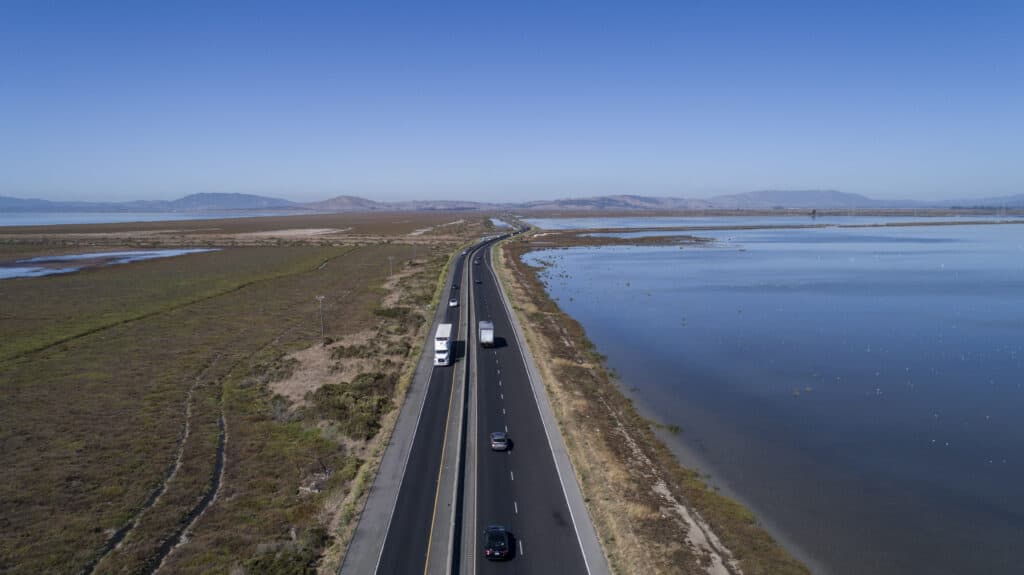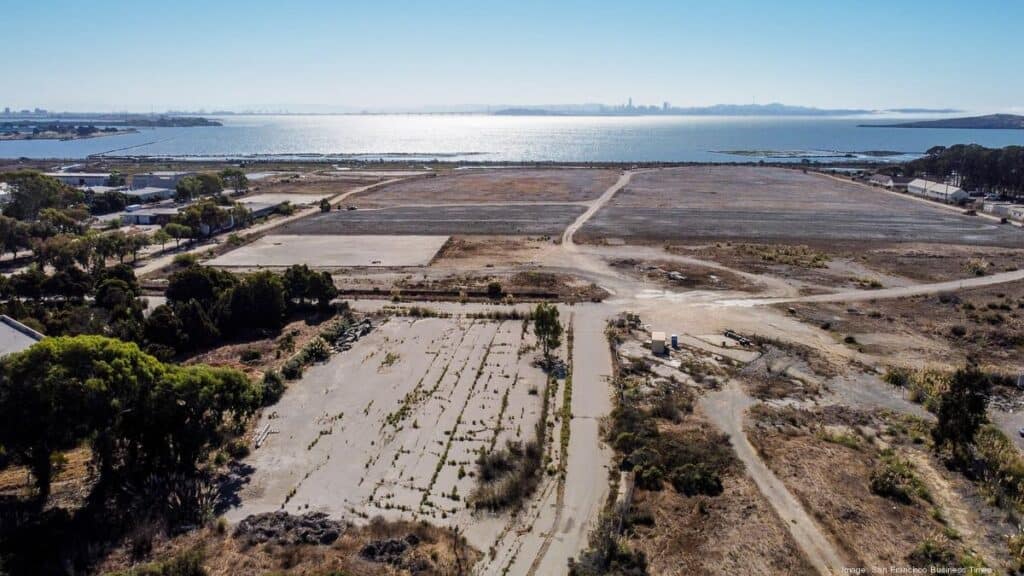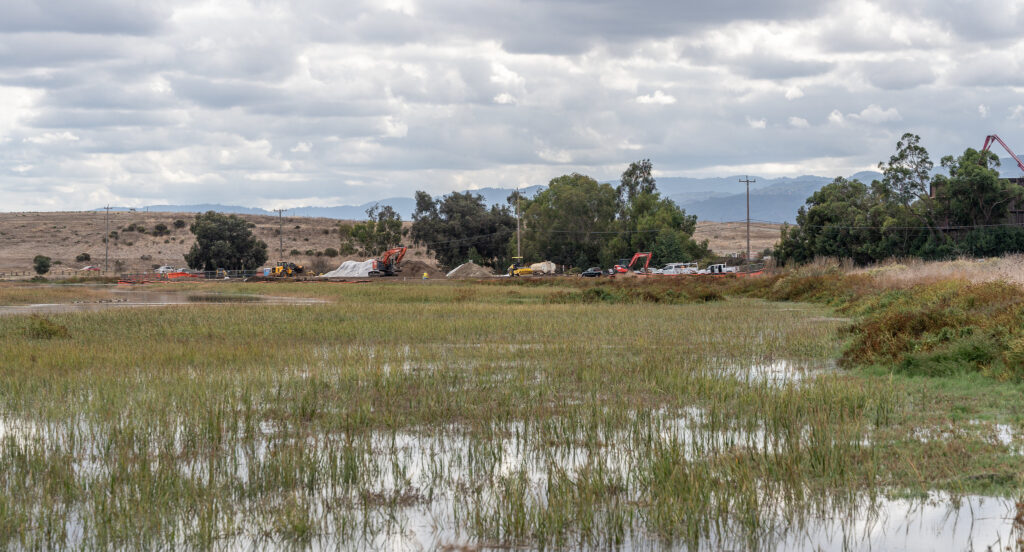
What do a team of restoration experts, a habitat transition zone of native wetland plants, and a wastewater treatment facility have in common? They’re all helping to improve water quality and sea level rise resilience in the San Francisco Bay. They are also all key players in the new Palo Alto Horizontal Levee Project currently under construction near Byxbee Park in Palo Alto.
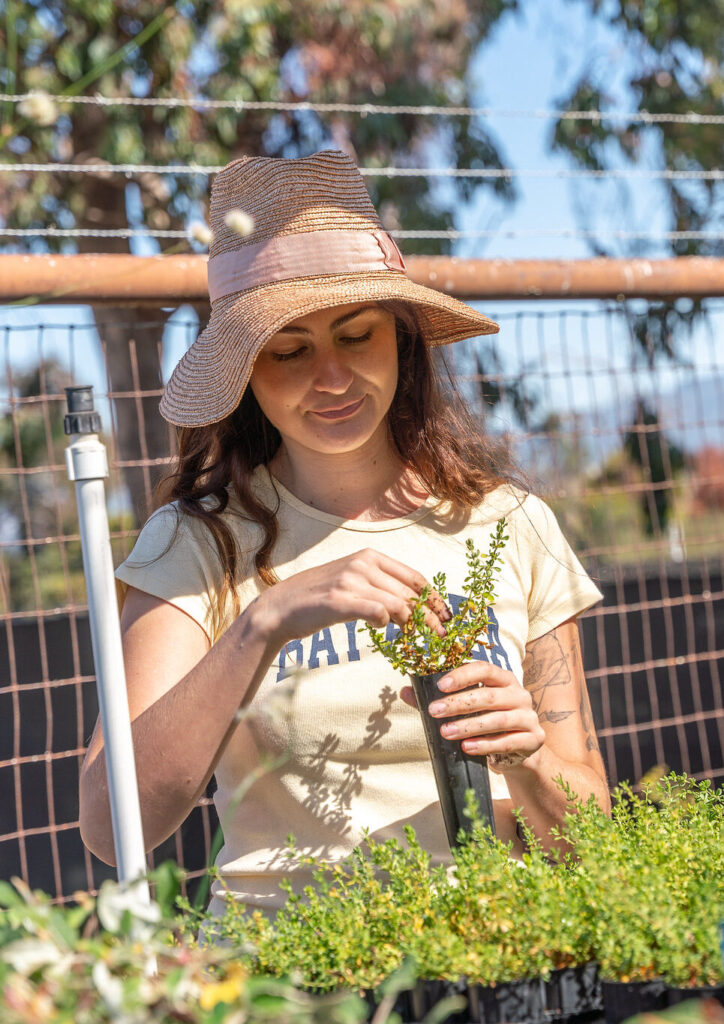
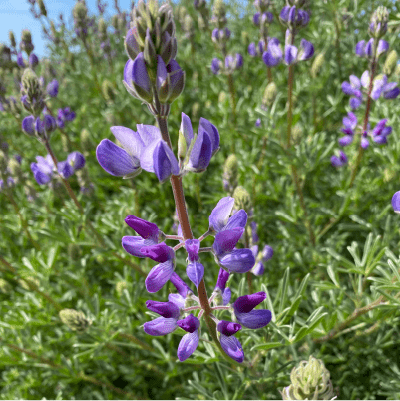
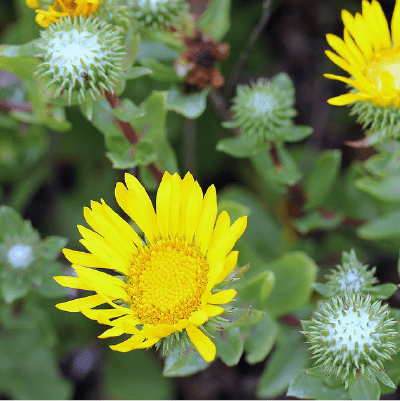
Save The Bay’s habitat restoration team is preparing to install 3,000 native plants on the new Palo Alto Horizontal Levee this winter with support from over 500 community volunteers. The project goals include improving habitat along the marsh, providing sea level rise adaptation and reduced flood risk, polishing treated wastewater, providing public access improvements, generating data and information that can contribute to larger regional goals and providing educational opportunities through community involvement.
This project is funded by the San Francisco Bay Water Quality Improvement Fund and will be carried out in partnership with the San Francisco Estuary Partnership, the City of Palo Alto, the Association of Bay Area Governments, and the EPA. We are thrilled to be part of such a novel, forward-thinking project!
Our restoration team works specifically on restoring the habitat transition zone. The transition zone is the area between the intertidal and upland zone. When functioning as a healthy habitat, the transition zone not only provides space for endangered wildlife but also is important in protecting communities from flooding in the face of sea level rise. Over the past several years, Save The Bay has had several exciting opportunities to work on horizontal levees around the bay, which are modeled on natural transition zone slopes. Horizontal levees are a nature-based solution to sea level rise that provide more ecosystem services and have fewer downstream impacts than conventional levees and seawalls. We utilize the same methods to restore a horizontal levee as we would a natural transition zone, but a horizontal levee has one additional thing going for it. It includes irrigation from treated effluent wastewater or stormwater.
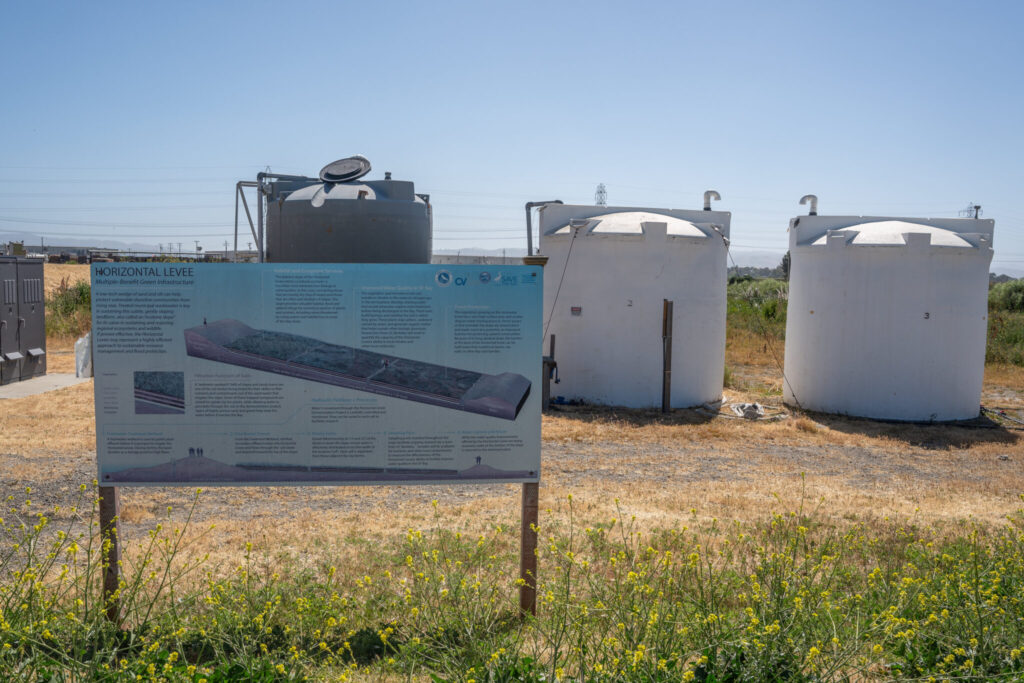
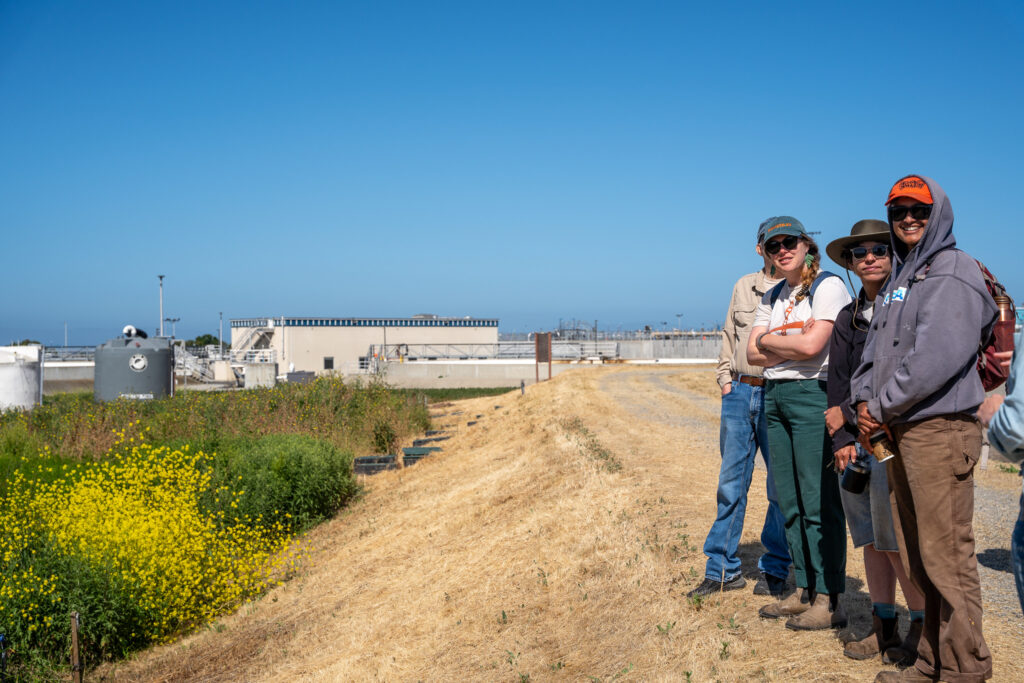
In 2014, Save The Bay was part of a closed, pilot experiment sending tertiary treated wastewater through a horizontal levee. This experiment took place on a 1.4 acre site at the Oro Loma Water Treatment Facility in San Lorenzo and had the following goals in mind:
- Pull out contaminants such as nutrients and heavy metals, common pollutants, pharmaceutical chemicals from the treated wastewater
- Provide additional storage for wastewater in the event of storms or overflow
- Use wastewater to irrigate and support habitat creation
Our restoration team densely planted the levee with native plant species, and ongoing research and monitoring was conducted by other partners to review the success of the project. Though more research was needed to understand the mechanisms behind contaminant removal, the project’s goals were met, and the project was deemed a success. This success means that future projects will be open systems that pass water through horizontal levees and then back out into the Bay. Today, the Oro Loma Horizontal Levee Demonstration Project still functions as a “living laboratory” for UC Berkeley Sedlak Research Group.
Our policy team has also been involved in advocating for the Hayward First Mile Levee, which “will be the first full-scale ‘living levee’ in the Bay Area that is designed to improve water quality while enhancing sea level rise resilience”¹.
When we can take advantage of these nature-based horizontal levees instead of hardened shoreline protections, we get a wonderful multi-benefit solution. Wastewater treatment plants can be great places for horizontal levees as well. Thirty-seven wastewater treatment plants are located directly on the Bay where we need protection. As sea level and storm frequency rise, wastewater infrastructure will be threatened, so there is investment in wanting to protect it and in many cases there is space available to build horizontal levees between these treatment plants and the Bay.
Horizontal levees at wastewater treatment plants also help with another big need for the health of the San Francisco Bay, which is the need to drive down nutrient pollution. Many of us have likely seen the effects or at least the news reports of large algal blooms that have been causing a lot of ecological fragility in the bay. Changing conditions due to climate change make us more vulnerable to harmful algal blooms, and nutrient offloading into the bay from wastewater treatment plants feeds those blooms. But passing treated wastewater through a horizontal levee as irrigation before it gets out into the Bay can reduce nutrient runoff and decrease algal blooms.
Join Us in the Field
Projects like the upcoming Palo Alto Horizontal Levee Project are moving the needle on sea level rise adaptation, Bay health, and climate resiliency. Volunteers have already had their hands in the dirt helping us grow the plants that will be installed on the site this winter.
If you are excited about joining us in the field to put plants in the ground, and to be a part of this ground-breaking initiative, visit our calendar and check out our upcoming volunteer events.