
Earlier this month, Save The Bay brought nearly 20 elected officials and their staff to a marsh in Hayward, Ca to learn about an exciting new project along the East Bay shoreline. The group of city councilmembers, as well as staff from regional, state and legislative offices, got an up close look at the future site of the First Mile Levee Project so they can be its champions as the project advances through design and construction.
Why would an elected official get excited about a new levee?
Leaders of shoreline communities have been facing flooding that is continuing to worsen due to sea level rise, and they are looking for real solutions to protect their communities from the damage. The First Mile Horizontal Levee Project is a fantastic example of a large project that will protect the Hayward and San Lorenzo communities.
It’s also a whole lot more.
The First Mile Horizontal Levee is part of a wave of ‘nature-based’ projects in development around the Bay. While coastal communities have long responded to flooding problems by building hard walls to keep water out, the First Mile Levee instead leans on natural materials, such as dirt and plants, to provide flood protection that works with nature rather than against it. The result is not just avoiding flooding, but a multi-benefit project that adds value to the landscape by incorporating walking trails for community members as well as habitat for migratory birds and endangered species that live in the marsh.
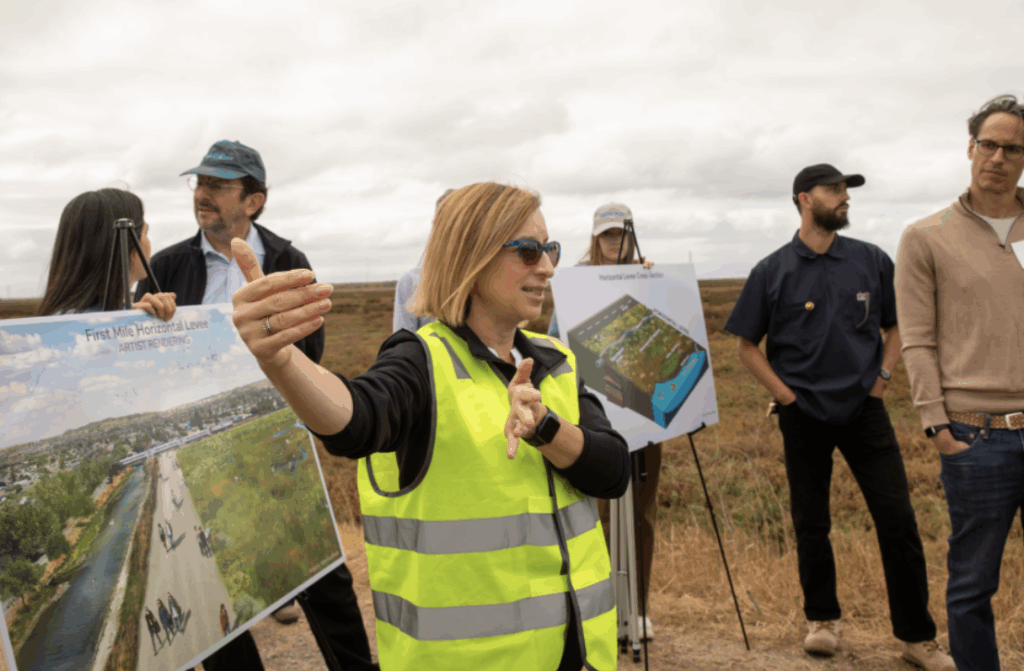
The First Mile project is also specifically designed to help naturally treat pollutants in wastewater through underground soil beds that sit within the levee design. The East Bay Dischargers Authority (EBDA) is particularly keen on this aspect because of its huge potential to improve wastewater quality before it reaches the Bay. During the tour, EBDA showed off a nearby demonstration project, a kind of ‘living laboratory’ at the Oro Loma Wastewater facility, where researchers are learning how effective different compositions of plants and soil are at filtering various types of pollutants carried in wastewater.
A student at Chabot College affiliated with the local non-profit organization Teach Earth Action also joined the tour to speak about the need for community members to have local jobs and the ability to connect with nature to feel a part of their own future. By amplifying traditional flood protection with natural materials and processes, the First Mile Levee project promises to not only safeguard people, provide local jobs and professional opportunities, but also strengthen infrastructure that our communities depend on and create space for the community to reconnect with the shoreline.
As with any innovative project, tour leaders also highlighted the many challenges on the road to completion. A speaker from Hayward Area Recreational District, for instance, underscored the complexities of shoreline ownership and the need for coordination among multiple stakeholders. Agencies and community members also face enormous capacity challenges – especially in frontline communities – when working to address sea level rise. Elected officials can play a crucial role in helping to overcome these types of challenges by supporting local agency involvement and regional collaboration, as well as by helping to secure project permits and funding.